Risk Intelligence | Contract Oversight | Resilience

Certified AI Project Risk, Contracts and Supply Chain Resilience Manager (CAPRCSRM)®

Anticipate Disruption. Strengthen Contract Oversight, Protect Project Delivery.

Certified AI Project Risk, Contracts and Supply Chain Resilience Manager (CAPRCSRM)®
8 Modules
40 Learning Hours
No Coding Required
Flexible Learning

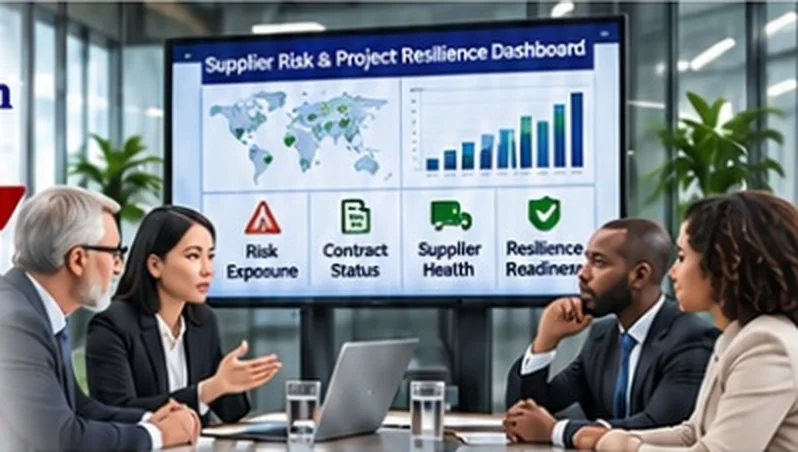
Connect project risks, contractual commitments, supplier performance and supply chain continuity through responsible AI-assisted analysis.

Develop practical controls, early-warning indicators and coordinated response plans.

Unify project, contract, supplier and supply chain risks for a single, actionable view.

Contract Accountability

Track contractual commitments, obligations and changes to reduce delivery risk.

Validated AI Insights

Use AI-assisted analysis to spot risk signals, assess impact and prioritize actions.

Design realistic response and recovery plans to maintain delivery and supply continuity.

Project & Program Managers

Manage delivery risk, contract commitments and supplier dependencies across projects.

Contract Professionals

Oversee contract terms, performance, changes and obligations throughout delivery.

Supply Chain & Resilience Leaders

Build supply chain continuity, coordinate recovery and strengthen overall resilience.

Establish a structured approach to manage project, contract and supply chain risks with clear roles, policies and controls.

02 Dependency Analysis

Analyze project and supply chain dependencies, identify risk exposures and assess potential impact on delivery.

03 Contract Oversight

Monitor contractual obligations, performance and changes, and address risks to cost, schedule and delivery.

Supplier Risk | AI Validation | Continuity & Recovery | Monitoring & Escalation | Testing & Improvement

  • Risk context
  • Decision rights
  • Assessment criteria

Practical Activity: Develop a risk-management plan.

02 Risk Identification & Dependency Assessment

  • Criticality mapping
  • Risk statements
  • Prioritization

Practical Activity: Create a dependency map and risk register.

03 Contract Obligations & Commercial Oversight

  • Deliverables
  • Acceptance evidence
  • Change control

Practical Activity: Build an obligations tracker.

02Risk & Dependency Assessment

03Contract Oversight

05AI Risk Intelligence & Analytics

06Continuity & Recovery

08Resilience Testing & Improvement

Record and track key risks, owners and mitigation actions.

Obligations Tracker

Monitor contract obligations, due dates and performance.

Supplier Risk Profile

Assess supplier risk, exposure and mitigation status.

Define response steps, roles and recovery actions.

AI Validation Record

Document AI use, data basis, findings and validation results.

Contract Ambiguity

Clarify terms and determine obligations.

Logistics Interruption

Evaluate options and maintain delivery.

Explore a coordinated approach to risk, contracts, suppliers and recovery.

Flexible study • Examination pathway

Virtual Instructor-Led

Live guidance • Exam or approved capstone

Corporate Cohort

Cross-functional teams • Applied scenarios

Business and spreadsheet familiarity recommended. No programming required.

100 questions • 90 minutes • 70% pass

One retake within 3 months

Instructor-Led Capstone

Integrated risk, contract oversight and resilience plan

Eligible instructor-led cohorts only

Register for CAPRCSRM and get started.

2 Learn

Complete the eight modules and practical work.

3 Apply

Build your risk, contract and resilience portfolio.

Pass the examination or complete the capstone.

5 Certify

Earn your CAPRCSRM certification.

Contract Performance

Strengthen contractual accountability and outcomes.

Supplier Assurance

Enhance supplier performance and manage risk.

CAPSCTL

Lead transformation

CAPRCSRM

Manage risk and resilience

Valid for 3 years • Continuing professional development • Ethical practice.

  • Do I need programming experience?
  • Does this program cover continuity planning?
  • Can our organization arrange corporate training?
Prepare for Disruption. Protect Your Commitments.
Enroll in
CAPRCSRM®
Request
Corporate Training

Choose Your Pathway and Enroll

More about CAPRCSRM®

The complete program information, in one place. Swipe sideways or use the arrows to browse each topic.

1
Program Overview

The Certified AI Project Risk, Contracts and Supply Chain Resilience Manager (CAPRCSRM) program prepares professionals to identify, evaluate, and manage the interconnected risks that affect projects, contracts, suppliers, and operational delivery.

A project can be disrupted by more than an internal scheduling problem. Supplier capacity constraints, unclear contractual obligations, inaccurate planning assumptions, logistics interruptions, technology failures, and weak escalation procedures can create delays, additional costs, and service interruptions. Effective risk management requires a coordinated view of these dependencies.

CAPRCSRM integrates project risk assessment, contract administration, supplier risk monitoring, business continuity, and recovery planning. Participants learn to identify critical dependencies, establish early-warning indicators, track contractual commitments, develop response plans, and communicate risk information to decision-makers.

The program also examines how AI can assist with document review, risk classification, supplier information analysis, exception reporting, and scenario development. Participants learn to validate these outputs, assess information quality, and retain appropriate human approval over commercial and operational decisions.

No programming background is required. The emphasis is on practical management, analytical interpretation, documented decisions, and coordinated response.

2
Program at a Glance
Program FeatureDetails
CredentialCertified AI Project Risk, Contracts and Supply Chain Resilience Manager
AbbreviationCAPRCSRM
Awarding OrganizationAAPSCM®
Program FocusIntegrated project risk, contract oversight, supplier risk, and supply chain resilience
CurriculumEight integrated modules
Recommended Learning Commitment40 hours across instruction, guided study, practical activities, and assessment preparation
Delivery OptionsSelf-paced, virtual instructor-led, and corporate cohort training
Programming RequirementNone
Assessment PathwaysCertification examination; approved capstone alternative for eligible instructor-led cohorts
Credential ValidityThree years
RenewalSubject to AAPSCM® continuing professional development and renewal requirements
3
Why CAPRCSRM?

See Risk Across the Entire Delivery Network

A supplier issue can become a contract problem, a schedule delay, a budget overrun, and an operational interruption. CAPRCSRM helps professionals assess these connections and assign clear ownership before risks escalate.

Connect Contract Commitments with Project Controls

Participants learn to translate deliverables, acceptance requirements, reporting obligations, and change procedures into practical monitoring activities.

Use AI to Support Earlier Investigation

AI-assisted tools can help organize information and highlight potential concerns. Participants learn how to verify findings against source records and distinguish useful signals from incomplete or misleading information.

Prepare Responses Before Disruption Occurs

The program develops contingency planning, escalation, continuity, and recovery capabilities. Participants examine alternatives in advance and define when action should begin.

Demonstrate Resilience through Evidence

Participants learn to test response arrangements, document decisions, track recovery performance, and use lessons learned to strengthen future delivery.

4
Who Should Enroll?

CAPRCSRM is designed for professionals who manage or support project and supply chain exposure, including:

  • Project managers, program managers, and PMO professionals.
  • Procurement, purchasing, and strategic sourcing specialists.
  • Contract managers and contract administrators.
  • Supply chain, logistics, inventory, and operations managers.
  • Supplier relationship and vendor risk professionals.
  • Business continuity and resilience coordinators.
  • Commercial managers and project controls specialists.
  • Risk analysts and operational assurance professionals.
  • Consultants supporting procurement, project delivery, and continuity planning.
  • Professionals preparing for broader risk and resilience responsibilities.

The program is particularly relevant to organizations that depend on critical suppliers, outsourced services, complex delivery schedules, or coordinated contractual commitments.

5
What You Will Learn

Upon successful completion, participants should be able to:

  • Establish a coordinated risk-management approach for projects, contracts, and supply chain activities.
  • Map critical suppliers, contractual dependencies, delivery milestones, and operational requirements.
  • Develop risk registers with clear causes, consequences, owners, controls, and response actions.
  • Assess risk significance using consistent criteria and documented assumptions.
  • Translate contractual obligations into actionable monitoring and reporting requirements.
  • Evaluate supplier exposure, concentration, capacity, performance, and continuity arrangements.
  • Apply AI-assisted analysis to selected risk and contract-management tasks.
  • Validate analytical outputs and protect sensitive commercial information.
  • Define early-warning indicators, escalation thresholds, and decision responsibilities.
  • Develop contingency, continuity, and recovery plans.
  • Conduct scenario exercises and evaluate response readiness.
  • Report residual exposure and recommend improvements to senior decision-makers.
6
CAPRCSRM Competency Model

The competency model defines the capabilities participants develop and demonstrate through assessment and practical application.

Competency DomainProfessional CapabilityEvidence of Application
1. Integrated Risk GovernanceEstablish scope, accountability, assessment criteria, and escalation arrangements.Risk-management plan, responsibility matrix, and decision framework.
2. Dependency and Exposure AnalysisIdentify how suppliers, contracts, resources, systems, and milestones affect delivery.Dependency map, criticality assessment, and risk register.
3. Contract Performance OversightTranslate contractual commitments into monitoring, acceptance, and change-control activities.Obligations register, milestone tracker, and change log.
4. Supplier and Supply Chain Risk ManagementEvaluate supplier capability, concentration, performance, and continuity exposure.Supplier risk assessment, segmentation model, and action plan.
5. AI-Assisted Risk IntelligenceSelect appropriate analytical applications, verify outputs, and document limitations.AI use-case assessment, validation record, and evidence log.
6. Continuity and Recovery PlanningDevelop workable alternatives, response responsibilities, and recovery priorities.Contingency plan, response playbook, and recovery plan.
7. Monitoring and EscalationInterpret warning indicators and communicate proportionate management actions.Risk dashboard, escalation matrix, and executive report.
8. Testing and Continuous ImprovementEvaluate preparedness and strengthen controls through exercises and reviews.Exercise report, corrective-action register, and improvement plan.

Competency Development Approach

Participants progress through four stages:

  • Identify: Establish the exposure and its underlying causes.
  • Evaluate: Assess significance, dependencies, controls, and uncertainty.
  • Respond: Select actions, assign ownership, and prepare alternatives.
  • Verify: Test arrangements, monitor results, and improve performance.
7
Eight-Module Curriculum

Module 1: Integrated Risk Governance and Delivery Context

Establish a common approach to managing connected risks.

This module introduces the relationships among project delivery, contractual commitments, supplier performance, and operational continuity.

1.1 Project, Contract and Supply Chain Risk

  • Distinguish risks, issues, assumptions, constraints, and dependencies.
  • Identify how disruption can spread across delivery activities.
  • Establish the boundaries of an integrated risk assessment.

1.2 Governance, Accountability and Decision Rights

  • Define the responsibilities of sponsors, project managers, procurement teams, contract owners, suppliers, and operational leaders.
  • Establish escalation routes and approval authority.
  • Coordinate risk reviews across functions.

1.3 Risk Criteria and Management Planning

  • Define consistent assessment scales and reporting expectations.
  • Establish review frequency and documentation requirements.
  • Record assumptions and determine when specialist input is necessary.

Practical activity: Develop an integrated risk-management plan for a project involving a critical external supplier.

Module outcome: Establish a practical governance structure with clear assessment and response responsibilities.

Module 2: Risk Identification, Dependency Mapping and Assessment

Understand what could disrupt delivery and why it matters.

Participants develop a structured approach to identifying exposures and evaluating their consequences.

2.1 Dependency and Criticality Mapping

  • Map suppliers, resources, systems, facilities, transport routes, and contractual milestones.
  • Identify single points of failure and concentration exposure.
  • Determine which dependencies are essential to project and operational objectives.

2.2 Risk Identification and Documentation

  • Use interviews, process reviews, historical records, and scenario discussions.
  • Write risk statements that distinguish causes, events, and consequences.
  • Assign owners and document existing controls.

2.3 Risk Prioritization and Response Selection

  • Assess likelihood, impact, urgency, and control effectiveness.
  • Compare response options and resource requirements.
  • Identify residual exposure after proposed actions.

Practical activity: Create a dependency map and prioritized risk register for a supplier-dependent implementation project.

Module outcome: Produce a clear, evidence-supported assessment of the most significant delivery exposures.

Module 3: Contract Obligations and Commercial Risk Oversight

Turn contract requirements into visible management controls.

This module focuses on contract administration and coordination with authorized commercial and legal specialists.

3.1 Requirements, Deliverables and Acceptance

  • Connect statements of work with project requirements.
  • Identify deliverables, milestones, acceptance evidence, and responsible approvers.
  • Recognize ambiguity that requires clarification before execution.

3.2 Obligations, Performance and Documentation

  • Establish an obligations register and reporting calendar.
  • Track supplier commitments, service expectations, and supporting records.
  • Maintain evidence of reviews, approvals, communications, and performance concerns.

3.3 Change, Escalation and Specialist Review

  • Document changes affecting scope, cost, schedules, and obligations.
  • Coordinate contract concerns through authorized channels.
  • Identify issues requiring legal, financial, technical, or compliance review.

Practical activity: Develop a contract obligations tracker and change-control workflow for a procurement project.

Module outcome: Monitor contractual performance through documented responsibilities, evidence, and escalation arrangements.

Module 4: Supplier Risk and Supply Chain Vulnerability

Evaluate the partners and dependencies behind delivery commitments.

Participants examine supplier exposure and its implications for projects and continuing operations.

4.1 Supplier Segmentation and Criticality

  • Classify suppliers by business importance and replacement difficulty.
  • Identify concentration and subcontractor dependencies where information is available.
  • Prioritize assessment and monitoring effort.

4.2 Supplier Capability and Performance Assessment

  • Evaluate capacity, quality, delivery reliability, and responsiveness.
  • Examine the relevance and reliability of financial and operational information.
  • Identify gaps in supplier continuity arrangements.

4.3 Mitigation and Supplier Improvement

  • Develop corrective-action plans and review arrangements.
  • Evaluate alternative sourcing, inventory buffers, and delivery options.
  • Consider the cost and practical limitations of mitigation measures.

Practical activity: Prepare a supplier risk profile and mitigation plan for a critical component or service provider.

Module outcome: Recommend proportionate supplier controls and practical alternatives.

Module 5: AI-Assisted Risk Intelligence and Contract Analytics

Apply AI assistance with traceable evidence and professional review.

This module examines practical uses of AI while addressing the conditions needed for reliable application.

5.1 Risk and Contract Analysis Use Cases

  • Use approved tools to organize risk information and summarize reports.
  • Explore extraction of obligations, dates, and deliverables from sample documents.
  • Examine exception classification and supplier information analysis.

5.2 Data Quality and Output Validation

  • Identify missing, outdated, inconsistent, or unsupported information.
  • Verify extracted clauses and summaries against original documents.
  • Distinguish a generated suggestion from a confirmed finding.

5.3 Responsible Use and Human Oversight

  • Protect confidential contracts and commercially sensitive information.
  • Define review, approval, access, and recordkeeping responsibilities.
  • Document limitations and prevent unsupported automated decisions.

Practical activity: Review an AI-generated contract summary, identify inaccuracies, and produce a validated obligations record.

Module outcome: Use AI-assisted analysis while maintaining source traceability and accountable decision-making.

Module 6: Contingency, Continuity and Recovery Planning

Prepare workable responses before critical activities are interrupted.

Participants develop coordinated plans for maintaining essential delivery and restoring disrupted activities.

6.1 Disruption Scenarios and Business Impacts

  • Examine supplier failure, transport disruption, system unavailability, and capacity loss.
  • Assess impacts on project milestones, customer commitments, costs, and essential operations.
  • Establish recovery priorities with relevant stakeholders.

6.2 Contingency Options and Response Playbooks

  • Evaluate alternative suppliers, routes, resources, and sequencing.
  • Define response triggers and decision authority.
  • Establish communication and coordination requirements.

6.3 Recovery and Operational Restoration

  • Identify resources and dependencies needed for recovery.
  • Coordinate restoration activities and track outstanding risks.
  • Define evidence needed to resume normal operations.

Practical activity: Develop a response playbook for a critical supplier disruption affecting a major delivery milestone.

Module outcome: Produce an actionable contingency and recovery plan with clear ownership.

Module 7: Early-Warning Indicators, Reporting and Escalation

Translate risk information into timely management action.

This module develops the monitoring and reporting practices needed to identify change and coordinate responses.

7.1 Indicator Selection and Thresholds

  • Select indicators linked to specific risks and decisions.
  • Track delivery variance, quality concerns, overdue obligations, and corrective actions.
  • Establish thresholds and review them against operational context.

7.2 Dashboards and Executive Reporting

  • Present exposure, trends, actions, and decisions clearly.
  • Distinguish confirmed issues from emerging concerns.
  • Communicate data limitations and unresolved assumptions.

7.3 Escalation and Response Coordination

  • Define when concerns require management attention.
  • Prepare concise recommendations and response options.
  • Track decisions, action owners, and completion evidence.

Practical activity: Build a risk dashboard and executive escalation brief for a deteriorating supplier situation.

Module outcome: Deliver clear risk reporting that supports timely, proportionate decisions.

Module 8: Resilience Testing and Continuous Improvement

Test readiness and strengthen the system after every review.

Participants evaluate whether response arrangements are practical and identify improvements before and after disruption.

8.1 Scenario Exercises and Readiness Testing

  • Design tabletop exercises around realistic disruption scenarios.
  • Test responsibilities, information flows, decisions, and resource assumptions.
  • Record weaknesses and unresolved dependencies.

8.2 Incident and Post-Response Review

  • Examine what happened, what decisions were made, and what affected recovery.
  • Separate immediate causes from underlying process weaknesses.
  • Capture lessons without relying on unsupported assumptions.

8.3 Improvement Planning and Management Assurance

  • Prioritize corrective actions and assign accountable owners.
  • Update risk registers, contracts, supplier plans, and response arrangements.
  • Establish follow-up reviews and evidence of improvement.

Practical activity: Conduct a tabletop exercise and prepare a resilience improvement plan.

Module outcome: Demonstrate a disciplined process for testing readiness and improving future performance.

8
Applied Risk and Resilience Portfolio

Participants develop a connected set of management documents throughout the program.

Portfolio ComponentPurpose
Integrated Risk-Management PlanEstablish governance, scope, criteria, and reporting arrangements.
Dependency and Criticality MapIdentify essential suppliers, resources, systems, and delivery relationships.
Project and Supply Chain Risk RegisterRecord exposures, controls, owners, responses, and residual risk.
Contract Obligations RegisterTrack deliverables, dates, acceptance requirements, and responsibilities.
Supplier Risk ProfileSummarize criticality, performance concerns, evidence, and mitigation actions.
AI Validation RecordDocument source checks, corrections, limitations, and reviewer approval.
Contingency and Recovery PlaybookDefine triggers, alternatives, responsibilities, and recovery actions.
Early-Warning DashboardConnect indicators and thresholds with management decisions.
Executive Escalation BriefPresent the issue, consequences, options, and recommended action.
Exercise and Improvement ReportRecord test results, lessons, corrective actions, and follow-up requirements.

Activities use sample, synthetic, or appropriately anonymized information.

9
Practical Learning Scenarios

Critical Supplier Delay

Assess how a missed supplier milestone affects the project schedule, contractual commitments, costs, and operational readiness. Develop recovery options and an escalation recommendation.

Contract Deliverable Ambiguity

Identify unclear acceptance requirements, document the operational implications, and coordinate clarification through the appropriate contract and specialist review channels.

Logistics Interruption

Evaluate alternative routes, delivery priorities, inventory availability, and stakeholder communications following a transport disruption.

AI-Generated Contract Review Errors

Compare a generated summary against source documents, identify omitted or inaccurate obligations, and establish a documented validation process.

Supplier System Outage

Assess the consequences of unavailable ordering or reporting systems and develop temporary coordination and recovery arrangements.

10
Learning Tools and Technology

Depending on the delivery format, activities may use:

  • Spreadsheets: Risk registers, obligations trackers, supplier assessments, and action logs.
  • Project planning tools: Milestone dependencies, schedule impacts, and recovery sequencing.
  • Dashboard applications: Risk trends, performance indicators, and exception reporting.
  • Approved AI assistants: Document summarization, information organization, and draft scenario development.
  • Collaboration tools: Decisions, communications, evidence records, and action tracking.

Access requirements are communicated before enrollment. Assessment focuses on professional competencies rather than mastery of one software product.

11
Program Introduction Video

See how CAPRCSRM connects risk awareness with practical delivery protection.

The program overview introduces the competency model, eight-module curriculum, practical portfolio, assessment pathways, and applications across project and supply chain environments.

12
Training Options

Self-Paced Learning

Study independently using the supplied materials and structured activities.

Best suited to: Professionals seeking flexible preparation around work responsibilities.

Assessment: Certification examination.

Virtual Instructor-Led Training

Participate in scheduled sessions featuring guided analysis, demonstrations, scenario discussions, and instructor feedback.

Best suited to: Professionals who benefit from structured engagement and collaborative problem-solving.

Assessment: Certification examination or an approved capstone where explicitly included in the cohort’s enrollment terms.

Corporate Cohort Training

Build shared risk and resilience practices across procurement, project management, contracts, operations, and supply chain teams.

Best suited to: Organizations strengthening delivery assurance or preparing for supplier and operational disruption.

Corporate scenarios can reflect agreed organizational priorities while maintaining the program’s core competencies.

13
Eligibility and Recommended Preparation

Recommended preparation includes:

  • Familiarity with business processes and workplace documentation.
  • Basic spreadsheet and digital workplace skills.
  • Experience or interest in projects, procurement, contracts, suppliers, logistics, or operations.
  • Willingness to complete analytical exercises and practical planning activities.

Prior responsibility for supplier coordination, project delivery, contract administration, or operational risk is beneficial.

Programming experience and previous AI certification are not required. The program develops management capabilities; contractual interpretation and legal decisions remain with appropriately authorized specialists.

14
Certification Examination
Examination FeatureRequirement
Format100 multiple-choice questions
Duration90 minutes
Passing Score70%
CoverageAll eight modules
Question FocusApplied risk assessment, contract oversight, supplier exposure, AI validation, continuity, monitoring, and improvement
RetakeOne retake within three months, subject to AAPSCM® examination policies

Scenario-based questions assess the ability to evaluate evidence, recognize dependencies, select proportionate responses, and escalate concerns appropriately.

15
Instructor-Led Capstone Assessment

Available only where explicitly included in an eligible instructor-led cohort.

The capstone requires participants to develop an integrated risk, contract oversight, and resilience plan for a defined procurement or supply chain project.

Required Capstone Components

  • Executive brief and project context: Define objectives, scope, delivery commitments, stakeholders, and critical dependencies.
  • Risk governance and assessment: Establish criteria, ownership, escalation arrangements, and a prioritized risk register.
  • Contract oversight plan: Document obligations, milestones, acceptance evidence, and change-control requirements.
  • Supplier exposure assessment: Evaluate criticality, performance, concentration, and continuity concerns.
  • AI-assisted analysis and validation: Define a relevant use case and demonstrate source verification, limitations, and human review.
  • Contingency and recovery plan: Establish response triggers, alternatives, responsibilities, and recovery priorities.
  • Monitoring and executive reporting: Present indicators, thresholds, reporting frequency, and decision requirements.
  • Scenario exercise and improvement review: Test the plan and recommend evidence-supported corrective actions.

Capstone Assessment Criteria

CriterionWeight
Project context and dependency analysis10%
Risk assessment and governance20%
Contract obligations and delivery controls15%
Supplier and supply chain exposure assessment15%
AI application and output validation10%
Contingency and recovery planning15%
Monitoring, escalation, and reporting10%
Exercise findings and professional presentation5%
Total100%

Detailed submission requirements and the applicable passing standard are provided in the cohort assessment brief.

16
Certification Journey
  • Select your learning pathway and review enrollment requirements.
  • Enroll and access program materials.
  • Complete the eight modules and associated preparation activities.
  • Complete the examination or approved instructor-led capstone.
  • Receive certification following successful assessment and verification of requirements.
  • Maintain professional development and meet applicable renewal requirements.
17
Professional and Career Relevance

CAPRCSRM supports professionals seeking greater responsibility in:

  • Project risk and delivery assurance.
  • Procurement and supplier risk management.
  • Contract administration and performance oversight.
  • Supply chain continuity and resilience planning.
  • Operational risk coordination.
  • Program controls and management reporting.
  • Business continuity exercises.
  • Consulting and process improvement.

The credential complements workplace experience by developing a coordinated approach to risks that cross project, commercial, supplier, and operational boundaries.

18
Value for Employers

Organizations can use CAPRCSRM training to establish more consistent practices for:

  • Identifying critical delivery dependencies.
  • Assigning ownership for risks and contractual commitments.
  • Improving visibility of supplier concerns.
  • Documenting AI-assisted analysis and its validation.
  • Connecting warning indicators with response decisions.
  • Preparing practical contingency and recovery arrangements.
  • Coordinating escalation across business functions.
  • Testing readiness and tracking corrective actions.
19
How CAPRCSRM Complements the Program Portfolio
ProgramPrimary FocusProfessional Application
CAPSCPM — Certified AI Procurement and Supply Chain Project ManagerPlanning and delivering defined projects.Manage scope, schedules, budgets, suppliers, and project outcomes.
CAPSCTL — Certified AI Procurement and Supply Chain Transformation LeaderLeading broader organizational transformation.Align strategy, investment, operating models, adoption, and benefits.
CAPRCSRM — Certified AI Project Risk, Contracts and Supply Chain Resilience ManagerManaging interconnected delivery exposures.Strengthen risk controls, contract oversight, supplier monitoring, continuity, and recovery.

The three programs offer complementary development pathways in project execution, transformation leadership, and risk and resilience management.

20
Credential Maintenance and Professional Conduct

CAPRCSRM certification is valid for three years, subject to AAPSCM® policies.

Credential holders are expected to maintain relevant continuing professional development and comply with applicable renewal requirements.

Relevant development areas include project risk, procurement, contract administration, supplier management, AI governance, continuity planning, and operational resilience.

Professional responsibilities include:

  • Protecting confidential and commercially sensitive information.
  • Disclosing conflicts of interest.
  • Verifying AI-assisted findings before relying on them.
  • Maintaining accurate records of assessments and decisions.
  • Escalating matters beyond delegated authority.
  • Representing risk and recovery capabilities accurately.
21
Frequently Asked Questions

How does this program differ from general risk-management training?

CAPRCSRM connects project risks with contract obligations, supplier dependencies, and supply chain continuity. Participants develop a coordinated set of controls and response plans.

Do I need programming experience?

No. The program emphasizes management judgment, analytical interpretation, document review, and practical planning.

Does the program qualify participants to provide legal advice?

No. It develops contract administration and oversight capabilities, including recognizing when authorized legal or commercial review is required.

How is AI used in the program?

Participants examine approved applications for summarizing documents, extracting information, organizing risks, and drafting scenarios. Source verification and human review remain essential.

Does the program include continuity planning?

Yes. Participants develop contingency and recovery arrangements and test them through scenario exercises.

Are CAPSCPM or CAPSCTL prerequisites?

No mandatory prerequisite is established here. They provide complementary preparation in project delivery and transformation leadership.

Can self-paced participants choose the capstone?

No. Self-paced participants complete the certification examination. The capstone alternative is limited to eligible instructor-led cohorts where explicitly included.

Can corporate training use our organization’s scenarios?

Yes, subject to agreed scope and confidentiality arrangements. Activities must still address the program’s core competencies.

Where can I find fees and training dates?

Review the enrollment page or contact AAPSCM® for current fees, cohort schedules, corporate arrangements, and applicable policies.

22
Prepare for Disruption. Protect Your Commitments.

Develop the ability to connect risks, contracts, suppliers, and recovery decisions—and support project delivery with clear evidence and accountable action.

Become a Certified AI Project Risk, Contracts and Supply Chain Resilience Manager.

Program inquiries: [email protected]: www.aapscm.org

1 / 22Swipe or use the arrows →