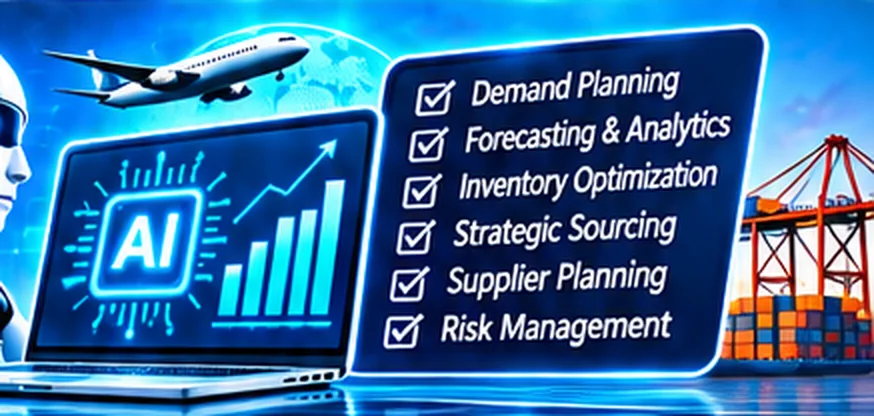
Predict Demand with AI. Plan Procurement with Confidence. Optimize Inventory. Strengthen Supplier Performance.

1. Program Overview

The American Certified AI Procurement Demand Planning & Forecasting Professional (AC-AIPDFP)® is an advanced, industry-focused credential that equips procurement and supply chain professionals with the knowledge and practical skills to apply Artificial Intelligence (AI), machine learning, and predictive analytics to demand planning, procurement forecasting, inventory optimization, and strategic sourcing.

  • Apply AI and predictive analytics to forecast procurement needs with greater accuracy.
  • Translate demand forecasts into purchasing plans, inventory requirements, and supplier commitments.
  • Optimize inventory levels and replenishment using AI-driven planning models.
  • Leverage market intelligence and demand sensing for faster, data-driven decisions.
  • Manage forecasting uncertainty and supply risks to ensure procurement continuity.

Program at a Glance

Certification TitleAmerican Certified AI Procurement Demand Planning & Forecasting Professional
DesignationAC-AIPDFP®
Awarding OrganizationAAPSCM®
Certification LevelProfessional Certification
Curriculum8 Core Knowledge Domains
Learning ApproachIndustry-focused instruction, case studies, practical applications, and real-world scenarios
Virtual Instructor-Led Training4 days, 2 hours daily (8 live hours)
Self-Paced LearningFlexible, independent study with complimentary exam preparation resources
Assessment Options (Virtual Instructor-Led)Choice of Certification Exam or Applied Capstone Project
Assessment (Self-Paced)Certification Exam Only (100 MCQs)
Certification Validity3 years (renewable per AAPSCM® policy)
Virtual Training Fee$1,200 USD
Self-Paced Fee (Exam Only)$399.99 USD
International ParticipationInternational applicants are welcome
High Industry Demand

A critical skill for reducing costs, preventing stockouts, and improving supply resilience.

Career Advancement

Build in-demand skills in demand planning, analytics, and supplier management.

Why Get Certified Through AAPSCM®?

  • Globally recognized & industry-aligned certification.
  • Specialized training in AI, predictive analytics, and demand planning.
  • Access to a professional network, events, and knowledge resources.
  • Flexible learning: instructor-led or self-paced options.
  • Industry-validated curriculum developed with procurement and supply chain experts.

Program Video

3. Certification Learning Outcomes

Upon successful completion, you will be able to:

  • Apply AI and machine learning to forecast procurement demand.
  • Develop demand plans and purchasing requirements from forecast insights.
  • Optimize inventory levels, safety stock, and replenishment policies.
  • Use market intelligence and demand sensing for real-time procurement adjustments.
  • Evaluate supplier capacity and develop sourcing plans.
  • Prepare procurement budgets based on demand and cost projections.
  • Assess forecasting risks and design mitigation strategies.
  • Implement responsible AI and data governance in procurement planning.

A Practical, Industry-Aligned Curriculum

Domain 1

AI & ML Fundamentals for Procurement Forecasting

Domain 2

Market Intelligence & Demand Drivers

Domain 3

Inventory Optimization & Procurement Planning

Domain 4

Strategic Sourcing, Budgeting & Supplier Planning

Domain 5

Demand Sensing & Procurement Automation

Domain 6

Predictive Risk Analytics & Supply Resilience

Domain 7

AI Integration with ERP & Planning Systems

Domain 8

Responsible AI, Governance & Digital Transformation

Training OptionDurationAssessmentFee
Virtual Instructor-Led (Online)4 Days (2 Hours Daily) 8 Live HoursChoice of: Certification Exam (100 MCQs, 90 Minutes), or Applied Capstone Project$1,200 USD
Self-Paced Learning (Exam Only)Flexible (Independent Study)Certification Exam Only (100 MCQs, 90 Minutes) Passing Score: 70%$399.99 USD
  • AI Procurement Demand Planner
  • Procurement Forecasting Analyst
  • Demand Planning Specialist
  • Inventory Optimization Analyst
  • Procurement Business Intelligence Analyst
  • AI-Driven Procurement Strategist
  • Supplier Capacity Planning Specialist
  • Supply Chain Planning Analyst
  • Procurement Budget Analyst
  • Digital Procurement Transformation Manager
ISO 9001 Quality Management
ISO/IEC 27001 Information Security
ISO 31000 Risk Management
ISO 20400 Sustainable Procurement
ISO/IEC 42001 AI Management Systems
NIST AI RMF AI Risk Management Framework
NIST CSF Cybersecurity Framework
ISO/IEC 17024 Personnel Certification
Industry-Focused Curriculum
Real-World Case Studies & Simulations
Flexible Learning Options
Responsible & Secure AI Use
Improved Procurement Performance
Greater Supply Chain Resilience
Demand Forecasting
Inventory Optimization
Strategic Sourcing
Supplier Analytics
Risk Management
AI-Enabled Procurement
Sustainable Planning
Enroll Today »Advance Your Career in AI-Powered Procurement Demand Planning & Forecasting with AAPSCM®
Enroll in
AC-AIPDFP®

Choose Your Pathway and Enroll

More about AC-AIPDFP®

The complete program information, in one place. Swipe sideways or use the arrows to browse each topic.

1
About the AC-AIPDFP® Certification

Building the Next Generation of AI-Enabled Procurement and Demand Planning Professionals

The American Certified AI Procurement Demand Planning & Forecasting Professional (AC-AIPDFP)® is an advanced professional certification developed and awarded by the American Association of Procurement, Supply Chain & Tourism Management (AAPSCM®).

The program is designed for procurement professionals, demand planners, forecasting analysts, strategic sourcing specialists, inventory managers, supply chain practitioners, business intelligence professionals, and organizational leaders who want to strengthen their ability to make intelligent, data-driven procurement decisions.

Organizations across the world are operating in increasingly unpredictable markets. Demand fluctuations, changing customer expectations, supplier capacity constraints, geopolitical uncertainty, inflationary pressures, transportation disruptions, and evolving technology requirements make procurement planning more challenging than ever.

Traditional forecasting methods frequently rely on historical purchasing records, manual spreadsheets, static assumptions, and periodic planning cycles. Although these methods remain valuable, they may not adequately capture complex relationships among demand, inventory, supplier performance, market conditions, and operational requirements.

Artificial intelligence introduces new capabilities for analyzing large datasets, recognizing demand patterns, identifying anomalies, evaluating alternative scenarios, and supporting more responsive procurement planning.

AI-assisted forecasting can help organizations evaluate future purchasing requirements, identify potential inventory shortages, anticipate supplier capacity challenges, and improve the coordination of procurement activities.

However, successful implementation requires professionals who understand both the analytical technologies and the procurement decisions those technologies support.

The AC-AIPDFP® certification bridges this gap by integrating AI and machine learning fundamentals with practical procurement planning, forecasting accuracy evaluation, strategic sourcing, inventory management, procurement budgeting, supplier collaboration, and responsible AI governance.

Candidates learn how to interpret forecasting information, evaluate analytical recommendations, identify planning risks, and translate demand projections into actionable procurement strategies.

The certification emphasizes the importance of professional judgment, data quality, model validation, and human oversight. AI should strengthen procurement decision-making rather than replace the accountability of procurement professionals.

The AC-AIPDFP® Professional Advantage

Graduates develop competencies that can help them:

  • Understand AI and machine learning applications in procurement forecasting.
  • Evaluate historical demand patterns and market indicators.
  • Interpret demand forecasts and forecasting accuracy.
  • Develop intelligent procurement planning recommendations.
  • Optimize inventory replenishment and purchasing requirements.
  • Support strategic sourcing and supplier capacity planning.
  • Evaluate procurement budget projections.
  • Identify forecasting uncertainty and supply disruption risks.
  • Use analytical dashboards to communicate procurement insights.
  • Support responsible AI adoption in procurement environments.

AC-AIPDFP® connects the analytical power of artificial intelligence with the commercial judgment required for effective procurement management.

2
Why This Certification Matters in Today's Global Economy

The Future of Procurement Belongs to Professionals Who Can Anticipate Change

Organizations cannot afford to make procurement decisions based solely on what happened last month or last year.

Modern procurement teams must anticipate what their organizations will need next, understand how market conditions may change, and develop purchasing strategies that balance cost, availability, supplier performance, and operational resilience.

AI-powered demand planning creates opportunities to improve these activities through better information processing, forecasting analysis, and scenario evaluation.

2.1 Demand Uncertainty Is Increasing

Customer purchasing behavior, production schedules, market conditions, and supplier availability can change quickly.

Procurement professionals must understand how to evaluate demand variability and adjust purchasing plans when conditions change.

2.2 Inventory Mistakes Can Be Expensive

Excess inventory ties up working capital, increases storage costs, and creates obsolescence risks.

Insufficient inventory can interrupt production, delay customer orders, and increase emergency purchasing expenses.

AI-assisted forecasting and inventory planning can support better-informed decisions about purchasing quantities, safety stock, and replenishment timing.

2.3 Supplier Capacity Must Match Future Demand

A supplier may offer competitive prices but lack the capacity to fulfill changing purchasing requirements.

Forecasting information helps procurement professionals evaluate supplier capabilities, communicate future requirements, and identify potential supply constraints.

2.4 Procurement Budgets Require Greater Precision

Purchasing decisions influence organizational cash flow, operating costs, and profitability.

Demand forecasting can support procurement budgeting by helping organizations estimate quantities, purchasing schedules, and potential cost exposure.

2.5 Market Intelligence Is Becoming Essential

Commodity prices, exchange rates, transportation costs, economic conditions, and supplier market developments can influence procurement requirements.

AI-assisted analysis can help professionals evaluate relevant market signals and incorporate them into planning decisions.

2.6 Organizations Need More Responsive Planning

Periodic forecasting alone may not be sufficient when demand conditions change rapidly.

Demand sensing and updated operational information can help procurement teams identify emerging changes and assess appropriate planning responses.

2.7 AI Requires Skilled Human Leadership

Forecasting models can generate inaccurate results when data is incomplete, conditions change, or model assumptions are inappropriate.

Organizations need professionals who can evaluate AI outputs, recognize limitations, and make responsible decisions.

2.8 Procurement Is Becoming More Strategic

Procurement professionals increasingly contribute to financial planning, operational resilience, supplier development, and organizational transformation.

AI forecasting competencies can strengthen their ability to participate in these strategic activities.

The AC-AIPDFP® certification prepares professionals to understand these challenges and apply intelligent planning principles to real procurement environments.

3
Why Choose AC-AIPDFP®?

A Professional Certification Designed for Intelligent Procurement Decision-Making

AI-Powered Forecasting Expertise

Gain a practical understanding of AI and machine learning applications in demand forecasting, procurement planning, and predictive analytics.

Learn how forecasting models can identify demand patterns, evaluate relevant variables, and support purchasing decisions.

Practical Demand Planning Competencies

Understand how organizations translate demand forecasts into procurement requirements, purchasing schedules, inventory plans, and supplier commitments.

Strategic Sourcing Intelligence

Explore how forecast information supports supplier selection, sourcing strategies, contract planning, and purchasing negotiations.

Inventory Optimization Knowledge

Develop competencies in inventory classification, reorder points, safety stock, replenishment planning, and inventory performance evaluation.

Procurement Budgeting and Cost Intelligence

Learn how demand projections can support purchasing budgets, cost estimates, spending forecasts, and procurement financial planning.

Predictive Procurement Risk Management

Evaluate demand uncertainty, supplier lead-time variability, supply disruptions, and contingency planning requirements.

Business Intelligence and Analytics

Understand how dashboards, forecasting reports, and analytical summaries can support procurement management decisions.

Responsible AI Implementation

Develop knowledge of forecasting model governance, data quality, information security, model validation, and human oversight.

Career Development and Professional Differentiation

Strengthen your professional profile with competencies that connect procurement management, forecasting, artificial intelligence, and business analytics.

4
Why Earn Your Certification Through AAPSCM®?

Professional Development Focused on Procurement Excellence and Emerging Technologies

AAPSCM® develops professional education and certification programs addressing procurement, supply chain management, logistics, and related business disciplines.

The AC-AIPDFP® certification reflects the growing importance of artificial intelligence and advanced analytics in procurement decision-making.

4.1 Specialized Procurement and AI Curriculum

The program integrates procurement management principles with AI forecasting and predictive analytics.

Rather than examining forecasting as an isolated mathematical activity, candidates study how forecasting information affects purchasing, supplier management, inventory, budgeting, and operational performance.

4.2 Comprehensive Professional Knowledge Domains

Eight structured knowledge domains provide coverage of the concepts and applications required for AI-enabled procurement planning.

4.3 Practical Business Applications

The curriculum emphasizes realistic procurement scenarios involving demand changes, inventory shortages, supplier capacity constraints, budget limitations, and market volatility.

4.4 Flexible Professional Learning

Candidates can select a self-paced examination pathway or participate in scheduled virtual instructor-led training.

4.5 Professional Competency Development

The program supports the development of analytical reasoning, procurement planning, forecasting interpretation, supplier coordination, and responsible technology adoption.

4.6 International Business Perspective

The curriculum examines procurement forecasting challenges relevant to domestic and international supply chains.

4.7 Professional Networking Opportunities

Participants may explore AAPSCM® professional development activities, conferences, and networking opportunities, subject to applicable membership and event requirements.

4.8 Continuing Professional Development

Certification holders are encouraged to maintain their knowledge as forecasting technologies, AI applications, and procurement practices evolve.

5
Who Should Enroll?

Designed for Procurement Professionals, Analysts, Planners, and Future Leaders

The AC-AIPDFP® certification is suitable for professionals seeking to strengthen their analytical capabilities and contribute to AI-enabled procurement planning.

Procurement and Purchasing Professionals

  • Procurement Managers
  • Procurement Analysts
  • Purchasing Officers
  • Purchasing Specialists
  • Procurement Planning Managers
  • Category Managers
  • Strategic Sourcing Professionals

These professionals can apply forecasting knowledge to purchasing requirements, sourcing strategies, and supplier coordination.

Demand Planning and Forecasting Professionals

  • Demand Planners
  • Forecasting Analysts
  • Supply Planners
  • Sales and Operations Planning Analysts
  • Demand Planning Specialists
  • Integrated Business Planning Professionals

These professionals can strengthen their knowledge of forecasting methodologies, demand variability, and AI-assisted planning.

Inventory and Materials Management Professionals

  • Inventory Managers
  • Inventory Analysts
  • Materials Planners
  • Replenishment Specialists
  • Warehouse Planning Professionals
  • Supply Chain Coordinators

These professionals can apply forecasting insights to inventory optimization and replenishment decisions.

Artificial Intelligence and Analytics Professionals

  • AI Business Analysts
  • Procurement Data Analysts
  • Predictive Analytics Specialists
  • Business Intelligence Professionals
  • Data Science Practitioners
  • Digital Transformation Specialists

These professionals can strengthen their understanding of procurement applications and operational planning requirements.

Finance and Operations Professionals

  • Procurement Budget Analysts
  • Financial Planning Professionals
  • Operations Analysts
  • Cost Analysts
  • Supply Chain Risk Analysts
  • Operations Managers

These professionals can use forecasting information to support resource allocation, purchasing budgets, and operational planning.

Senior Management and Executive Professionals

  • Procurement Directors
  • Supply Chain Directors
  • Operations Directors
  • Strategic Planning Managers
  • Digital Transformation Managers
  • Business Transformation Leaders

These professionals can develop a stronger understanding of AI-enabled procurement capabilities, implementation considerations, and governance requirements.

6
Comprehensive Program Learning Outcomes

What You Will Be Able to Do After Completing AC-AIPDFP®

The certification is designed to develop knowledge and practical competencies across six major learning areas.

Learning Area 1: Artificial Intelligence and Forecasting Fundamentals

Candidates will learn to:

  • Explain AI and machine learning concepts relevant to procurement.
  • Distinguish statistical forecasting from AI-assisted forecasting.
  • Identify appropriate forecasting data sources.
  • Recognize trends, seasonality, and demand variability.
  • Explain forecasting horizons and model selection.
  • Interpret forecasting accuracy and bias.

Learning Area 2: Procurement Demand Planning

Candidates will learn to:

  • Translate demand forecasts into purchasing requirements.
  • Evaluate procurement planning assumptions.
  • Develop purchasing schedules.
  • Assess supplier capacity against projected demand.
  • Explain cross-functional planning requirements.
  • Recommend adjustments when demand changes.

Learning Area 3: Inventory and Replenishment Optimization

Candidates will learn to:

  • Evaluate inventory requirements.
  • Explain safety stock and reorder point calculations.
  • Interpret inventory turnover.
  • Identify excess inventory and shortage risks.
  • Evaluate replenishment policies.
  • Recommend inventory planning improvements.

Learning Area 4: Strategic Sourcing and Procurement Budgeting

Candidates will learn to:

  • Use demand projections in sourcing decisions.
  • Evaluate supplier lead times and capacity.
  • Develop purchasing cost projections.
  • Assess procurement budget requirements.
  • Evaluate alternative sourcing scenarios.
  • Support supplier collaboration.

Learning Area 5: Predictive Analytics and Procurement Risk

Candidates will learn to:

  • Identify forecasting uncertainty.
  • Evaluate supplier disruption scenarios.
  • Interpret analytical dashboards.
  • Explain demand sensing.
  • Develop procurement contingency recommendations.
  • Evaluate forecasting model performance.

Learning Area 6: Responsible AI and Digital Transformation

Candidates will learn to:

  • Identify AI implementation requirements.
  • Evaluate forecasting data quality.
  • Explain AI model validation.
  • Recognize model bias and limitations.
  • Apply information security principles.
  • Recommend responsible AI governance practices.
7
Comprehensive Certification Curriculum

Eight Core Knowledge Domains

The AC-AIPDFP® curriculum is organized into eight interconnected knowledge domains. Each domain combines technical concepts, procurement management principles, practical applications, and professional competencies.

Domain 1: Foundations of AI, Machine Learning, and Procurement Demand Forecasting

Understanding the Technologies Behind Intelligent Procurement Planning

Domain Objective: Develop a strong foundation in artificial intelligence, machine learning, statistical forecasting, and demand planning concepts.

Key Topics

1.1 Introduction to Procurement Demand Forecasting

  • Purpose of procurement forecasting
  • Forecasting in purchasing operations
  • Demand planning versus forecasting
  • Forecasting and organizational performance
  • Forecasting horizons
  • Procurement planning cycles

1.2 Artificial Intelligence Fundamentals

  • Artificial intelligence concepts
  • Machine learning fundamentals
  • Supervised learning
  • Unsupervised learning
  • Predictive analytics
  • AI applications in procurement

1.3 Traditional Forecasting Methods

  • Historical averages
  • Moving averages
  • Weighted moving averages
  • Exponential smoothing
  • Trend analysis
  • Seasonal forecasting

1.4 AI-Assisted Forecasting

  • Machine learning forecasting concepts
  • Regression-based forecasting
  • Time-series modeling
  • Forecast feature selection
  • Model training and validation
  • Model limitations

1.5 Demand Data Preparation

  • Data collection
  • Data cleaning
  • Missing information
  • Outlier detection
  • Data consistency
  • Historical data reliability

1.6 Forecasting Accuracy

  • Mean Absolute Error
  • Mean Absolute Percentage Error
  • Weighted Absolute Percentage Error
  • Forecast bias
  • Model comparison
  • Forecast performance monitoring

Practical Learning Activity

Analyze a sample procurement demand dataset, identify trends and seasonality, compare forecasting methods, and prepare a short forecasting evaluation report.

Expected Professional Competency

Candidates can explain forecasting methodologies, interpret forecast results, and identify appropriate forecasting approaches for procurement planning.

Domain 2: AI-Powered Market Intelligence, Demand Drivers, and Procurement Forecasting Insights

Turning Market Information into Procurement Intelligence

Domain Objective: Develop the ability to analyze market conditions, demand drivers, and external information that influence procurement requirements.

Key Topics

2.1 Procurement Market Intelligence

  • Market research fundamentals
  • Supplier market analysis
  • Industry demand patterns
  • Market information sources
  • Procurement market monitoring

2.2 Economic and Commercial Demand Drivers

  • Inflation
  • Commodity prices
  • Currency movements
  • Transportation costs
  • Economic growth indicators
  • Consumer purchasing trends

2.3 Demand Pattern Analysis

  • Seasonal purchasing behavior
  • Promotional demand
  • Product lifecycle changes
  • Customer demand shifts
  • Business expansion requirements

2.4 AI-Assisted Market Analysis

  • Market trend identification
  • Data classification
  • Analytical summaries
  • Demand driver analysis
  • External variable evaluation

2.5 Market Volatility and Forecast Adjustments

  • Demand uncertainty
  • Price volatility
  • Supplier market changes
  • Scenario assumptions
  • Forecast revision procedures

2.6 Procurement Intelligence Reporting

  • Market intelligence dashboards
  • Procurement management summaries
  • Market risk indicators
  • Forecast adjustment recommendations

Practical Learning Activity

Prepare an AI-assisted procurement market intelligence report evaluating demand changes, supplier market conditions, and purchasing cost considerations.

Expected Professional Competency

Candidates can interpret market intelligence and recommend procurement planning adjustments supported by relevant evidence.

Domain 3: Intelligent Inventory Optimization and Procurement Planning

Balancing Inventory Availability, Cost, and Procurement Efficiency

Domain Objective: Develop practical knowledge of inventory optimization, purchasing requirements, and replenishment planning.

Key Topics

3.1 Inventory Management Fundamentals

  • Inventory classifications
  • Raw materials
  • Work-in-process inventory
  • Finished goods
  • Maintenance and operating supplies

3.2 Inventory Performance

  • Inventory turnover
  • Inventory carrying costs
  • Stockout costs
  • Inventory availability
  • Excess and obsolete inventory

3.3 Demand Variability

  • Stable demand
  • Seasonal demand
  • Intermittent demand
  • Unpredictable demand
  • Demand variability measurement

3.4 Inventory Classification

  • ABC analysis
  • Inventory prioritization
  • Critical inventory identification
  • Inventory segmentation

3.5 Replenishment Planning

  • Reorder points
  • Safety stock
  • Lead-time demand
  • Economic Order Quantity
  • Replenishment cycles
  • Service level considerations

3.6 AI-Assisted Inventory Optimization

  • Demand-based replenishment
  • Inventory anomaly detection
  • Inventory planning recommendations
  • Multi-location inventory concepts

3.7 Procurement Planning Integration

  • Materials requirements planning
  • Purchasing schedules
  • Supplier replenishment coordination
  • Inventory and procurement alignment

Practical Learning Activity

Develop an inventory replenishment plan using demand forecasts, supplier lead times, inventory costs, and service level assumptions.

Expected Professional Competency

Candidates can evaluate inventory requirements and recommend procurement replenishment strategies that balance availability and cost.

Domain 4: Predictive Analytics for Strategic Sourcing, Procurement Budgeting, and Supplier Capacity Planning

Connecting Forecasting Intelligence with Commercial Procurement Decisions

Domain Objective: Develop competencies in using demand projections to support strategic sourcing, supplier planning, and procurement financial management.

Key Topics

4.1 Demand-Driven Strategic Sourcing

  • Strategic sourcing principles
  • Forecast-based sourcing requirements
  • Category demand analysis
  • Purchasing volume projections

4.2 Supplier Capacity Planning

  • Supplier production capacity
  • Supplier lead times
  • Supplier delivery reliability
  • Supplier capacity constraints
  • Forecast sharing

4.3 Procurement Cost Forecasting

  • Purchasing cost projections
  • Commodity price assumptions
  • Price variability
  • Cost scenario analysis
  • Total procurement cost considerations

4.4 Procurement Budget Development

  • Procurement budget preparation
  • Purchasing expenditure forecasts
  • Budget variance analysis
  • Financial planning coordination

4.5 Supplier Contract Planning

  • Volume commitments
  • Contract duration considerations
  • Supplier delivery schedules
  • Purchasing flexibility
  • Supplier performance requirements

4.6 Predictive Sourcing Intelligence

  • Supplier comparison
  • Sourcing scenario evaluation
  • Supplier risk indicators
  • Alternative sourcing recommendations

Practical Learning Activity

Develop a procurement sourcing and budget plan using projected demand, supplier capacity information, lead times, and purchasing cost assumptions.

Expected Professional Competency

Candidates can translate forecasts into sourcing plans, purchasing budgets, and supplier coordination strategies.

Domain 5: Real-Time Demand Sensing, AI Automation, and Integrated Procurement Planning

Making Procurement More Responsive to Changing Demand

Domain Objective: Develop knowledge of demand sensing, automated planning support, and integrated procurement processes.

Key Topics

5.1 Demand Sensing Fundamentals

  • Demand sensing concepts
  • Demand sensing versus traditional forecasting
  • Short-term demand changes
  • Demand signal identification

5.2 Operational Demand Information

  • Sales transactions
  • Customer orders
  • Inventory movements
  • Production requirements
  • Supplier delivery updates

5.3 AI-Assisted Demand Monitoring

  • Demand anomaly detection
  • Updated forecast inputs
  • Planning alerts
  • Exception identification

5.4 Procurement Automation

  • Automated planning recommendations
  • Purchasing workflow support
  • Replenishment notifications
  • Procurement exception management

5.5 Integrated Planning

  • Sales and Operations Planning
  • Integrated Business Planning
  • Procurement and finance coordination
  • Supplier collaboration

5.6 Human Oversight and Control

  • Forecast approval
  • Purchasing authorization
  • Exception review
  • Automated recommendation validation

Practical Learning Activity

Evaluate a sudden increase in demand and develop an adjusted procurement plan using updated inventory, supplier capacity, and purchasing information.

Expected Professional Competency

Candidates can explain demand sensing and recommend appropriate procurement responses to changing business conditions.

Domain 6: Big Data, Predictive Risk Analytics, and Procurement Forecasting Resilience

Anticipating Procurement Risks Before They Become Operational Disruptions

Domain Objective: Develop competencies in forecasting uncertainty, procurement risk analysis, and resilience planning.

Key Topics

6.1 Procurement Risk Fundamentals

  • Procurement risk categories
  • Supply disruption risks
  • Supplier performance risks
  • Inventory shortage risks

6.2 Forecasting Uncertainty

  • Forecast errors
  • Demand variability
  • Forecast confidence
  • Scenario assumptions

6.3 Supplier Risk Analytics

  • Supplier lead-time variability
  • Supplier capacity constraints
  • Supplier delivery performance
  • Supplier concentration risks

6.4 Big Data and Predictive Analytics

  • Procurement data integration
  • Predictive indicators
  • Anomaly detection
  • Analytical risk monitoring

6.5 Scenario and Sensitivity Analysis

  • Demand increase scenarios
  • Demand decline scenarios
  • Supplier disruption scenarios
  • Cost volatility scenarios

6.6 Procurement Resilience Strategies

  • Alternative suppliers
  • Contingency sourcing
  • Buffer inventory
  • Purchasing flexibility
  • Supply continuity planning

6.7 Risk Reporting

  • Risk dashboards
  • Procurement risk assessments
  • Management recommendations
  • Risk monitoring indicators

Practical Learning Activity

Develop a procurement risk assessment and contingency plan for an organization facing demand volatility and supplier delivery disruptions.

Expected Professional Competency

Candidates can identify forecasting-related procurement risks and recommend practical mitigation measures.

Domain 7: AI-Driven Inventory Forecasting, Replenishment, and Enterprise Planning Systems

Integrating Forecasting Intelligence Across Procurement Technologies

Domain Objective: Develop knowledge of enterprise procurement planning systems, inventory forecasting, and technology integration.

Key Topics

7.1 Enterprise Procurement Planning

  • Enterprise Resource Planning
  • Materials Requirements Planning
  • Procurement management systems
  • Supply planning systems

7.2 Inventory Forecasting

  • Inventory demand projections
  • Replenishment requirements
  • Lead-time planning
  • Inventory service levels

7.3 Enterprise Data Integration

  • Procurement master data
  • Supplier records
  • Inventory records
  • Purchasing transactions
  • Forecast data synchronization

7.4 AI-Assisted Replenishment

  • Replenishment recommendations
  • Inventory planning alerts
  • Exception identification
  • Purchasing schedule optimization

7.5 Procurement Analytics Integration

  • Business intelligence dashboards
  • Forecast reporting
  • Inventory performance reporting
  • Supplier performance indicators

7.6 System Governance

  • Data access controls
  • Information security
  • Data quality
  • Approval workflows
  • System testing
  • Audit documentation

Practical Learning Activity

Design a procurement planning framework illustrating how demand forecasts, inventory information, supplier records, and purchasing systems interact.

Expected Professional Competency

Candidates can evaluate enterprise planning requirements and recommend improvements to forecasting and replenishment processes.

Domain 8: Responsible AI, Forecasting Governance, and Digital Procurement Transformation

Leading AI Adoption with Accountability, Accuracy, and Professional Judgment

Domain Objective: Develop knowledge of responsible AI implementation, forecasting governance, and organizational transformation.

Key Topics

8.1 Responsible AI Principles

  • AI accountability
  • Transparency
  • Fairness
  • Human oversight
  • Ethical AI applications

8.2 Forecasting Model Governance

  • Model selection
  • Model validation
  • Forecast accuracy monitoring
  • Model drift
  • Model documentation

8.3 Data Governance

  • Data quality
  • Data ownership
  • Information confidentiality
  • Supplier data protection
  • Data access management

8.4 Cybersecurity

  • Procurement information security
  • System access controls
  • Data protection requirements
  • Technology risk management

8.5 AI Implementation Planning

  • Organizational readiness
  • Technology requirements
  • Stakeholder engagement
  • Resource planning
  • Implementation phases

8.6 Change Management

  • Employee training
  • User adoption
  • Procurement process redesign
  • Communication strategies
  • Leadership support

8.7 Performance Monitoring

  • Forecasting accuracy
  • Procurement planning effectiveness
  • Inventory performance
  • Supplier coordination
  • Continuous improvement

Practical Learning Activity

Develop an AI procurement forecasting implementation and governance plan addressing data quality, model monitoring, information security, organizational readiness, and performance evaluation.

Expected Professional Competency

Candidates can recommend responsible AI adoption strategies and evaluate the governance requirements of procurement forecasting systems.

8
AC-AIPDFP® Professional Competency Framework

The certification develops ten interconnected competencies that support AI-enabled procurement planning.

CompetencyProfessional Capability
AI and Machine Learning LiteracyUnderstand AI technologies and their forecasting applications
Demand ForecastingInterpret demand patterns and forecasting outputs
Procurement Demand PlanningTranslate forecasts into purchasing requirements
Market IntelligenceEvaluate market information and demand drivers
Inventory OptimizationAssess replenishment and inventory policies
Strategic Sourcing IntelligenceApply demand projections to supplier and sourcing decisions
Procurement BudgetingDevelop purchasing cost and expenditure projections
Predictive Risk ManagementEvaluate forecasting uncertainty and supply risks
Enterprise Planning IntegrationUnderstand forecasting integration with procurement systems
Responsible AI LeadershipApply governance, data security, validation, and human oversight
9
Training Options, Program Duration, and Fees

Choose the Learning Pathway That Fits Your Professional Goals

AAPSCM® offers two pathways designed to accommodate working professionals, independent learners, and organizations seeking structured workforce development.

Option 1: Self-Paced Learning and Certification Examination

$399.99 USD

Study Independently. Prepare Confidently. Demonstrate Your Knowledge.

The self-paced pathway is designed for professionals who prefer flexible, independent examination preparation.

What Is Included?

  • Certification examination registration
  • Complimentary examination preparation guide
  • Complimentary practice questions
  • Certification knowledge domain information
  • Independent study guidance
  • Examination administration
  • Certification assessment processing

Who Should Choose This Option?

This pathway is appropriate for experienced procurement professionals, analysts, planners, and independent learners who prefer to prepare for the examination according to their own schedules.

Mandatory Assessment

Self-paced candidates must complete the certification examination.

The capstone project is not available as an alternative assessment for self-paced candidates.

Option 2: Virtual Instructor-Led Training

$1,200 USD

Learn from Industry Professionals. Explore Practical Applications. Strengthen Your Procurement Intelligence.

The virtual instructor-led pathway provides structured live online instruction.

Program Duration

  • Four days of training
  • Two hours of live instruction daily
  • Eight total hours of live instruction

Training Experience

Participants explore:

  • AI forecasting fundamentals
  • Demand planning methodologies
  • Procurement forecasting examples
  • Inventory optimization scenarios
  • Strategic sourcing applications
  • Supplier planning considerations
  • Predictive analytics interpretation
  • Responsible AI implementation

Assessment Flexibility

Eligible virtual instructor-led participants may select either:

Pathway A: Certification Examination

Complete the 100-question multiple-choice examination and achieve a minimum passing score of 70%.

Pathway B: Applied Capstone Project

Complete an approved AI procurement demand planning and forecasting project and achieve a minimum evaluation score of 70%.

Both pathways lead to the same AC-AIPDFP® certification upon successful completion of the applicable requirements.

Training Comparison

FeatureSelf-PacedVirtual Instructor-Led
Program Fee$399.99$1,200
DeliveryIndependentLive Online
DurationFlexibleFour Days
Live InstructionNot IncludedEight Hours
Exam Preparation GuideIncludedIncluded
Practice QuestionsIncludedIncluded
ExaminationMandatoryOptional Assessment
CapstoneNot AvailableOptional Assessment
Passing Score70%70%
Certification ValidityThree YearsThree Years
10
Certification Examination and Assessment Structure

Demonstrate Your Professional Knowledge and Applied Understanding

The AC-AIPDFP® examination evaluates candidates' understanding of AI procurement forecasting, demand planning, predictive analytics, inventory optimization, sourcing intelligence, and responsible AI governance.

Examination Requirements

  • Examination Type: Multiple-Choice Questions
  • Total Questions: 100
  • Duration: 90 Minutes
  • Minimum Passing Score: 70%
  • Minimum Correct Answers: 70
  • Knowledge Domains Covered: Eight
  • Certification Validity: Three Years

Proposed Examination Blueprint

Knowledge DomainQuestionsWeight
AI and Procurement Forecasting Foundations1515%
Market Intelligence and Demand Drivers1010%
Inventory Optimization and Procurement Planning1515%
Strategic Sourcing and Procurement Budgeting1515%
Demand Sensing and Automation1010%
Predictive Procurement Risk Analytics1515%
Enterprise Planning and Replenishment1010%
Responsible AI and Forecasting Governance1010%
Total100100%

Questions may assess conceptual knowledge, forecasting interpretation, inventory calculations, procurement planning scenarios, and professional judgment.

11
Applied Capstone Project — Virtual Instructor-Led Candidates Only

Capstone Title

Designing an AI-Powered Procurement Demand Forecasting and Intelligent Inventory Optimization Framework

Capstone Purpose

The capstone provides an opportunity for eligible virtual instructor-led candidates to demonstrate their ability to apply forecasting, procurement planning, inventory management, supplier analysis, and AI governance concepts to a realistic organizational challenge.

Business Scenario

A manufacturing organization purchases raw materials, packaging supplies, equipment components, and maintenance materials from multiple suppliers.

The organization experiences demand fluctuations, excess inventory, occasional stockouts, supplier delivery delays, and procurement budget pressures.

Management seeks to improve forecasting accuracy, purchasing coordination, inventory availability, and supplier planning through AI-assisted analytics.

The candidate is assigned to develop a professional AI procurement forecasting and optimization proposal.

Required Project Components

Part 1 — Procurement Demand Assessment

Analyze historical demand, purchasing requirements, inventory performance, and forecasting challenges.

Part 2 — Forecasting Data Readiness

Identify relevant data sources, evaluate data quality, and recommend preparation procedures.

Part 3 — Forecasting Methodology

Select appropriate forecasting methods and explain their suitability.

Part 4 — Forecast Accuracy Evaluation

Assess forecast performance and identify potential forecasting errors.

Part 5 — Inventory Optimization

Develop recommendations for safety stock, reorder points, inventory classifications, and replenishment.

Part 6 — Supplier Planning

Evaluate supplier capacity, lead times, delivery performance, and purchasing commitments.

Part 7 — Procurement Budget Forecasting

Prepare purchasing cost projections and evaluate budget scenarios.

Part 8 — Procurement Risk Assessment

Identify demand uncertainty, supplier disruption risks, and contingency planning requirements.

Part 9 — AI Governance

Recommend controls for data quality, model validation, information security, and human oversight.

Part 10 — Implementation Roadmap

Develop a phased implementation plan with stakeholders, milestones, training requirements, and performance indicators.

Required Deliverables

Candidates submit a professional project report supported by appropriate analytical evidence.

Deliverables may include:

  • Executive summary
  • Procurement demand analysis
  • Forecasting methodology
  • Forecast accuracy evaluation
  • Inventory optimization recommendations
  • Supplier capacity analysis
  • Procurement budget projections
  • Procurement risk assessment
  • AI governance framework
  • Implementation roadmap
  • Conclusions and recommendations

Proposed Capstone Evaluation Rubric

CriteriaWeight
Procurement Demand Assessment10%
Forecasting Data Readiness10%
Forecasting Methodology15%
Forecast Accuracy Evaluation10%
Inventory Optimization15%
Supplier and Sourcing Planning10%
Procurement Budget and Risk Analysis10%
AI Governance and Enterprise Integration10%
Implementation Roadmap5%
Report Quality5%
Total100%

Minimum Passing Score: 70%.

12
Professional Standards and International Frameworks

The AC-AIPDFP® curriculum incorporates concepts relevant to established international standards and professional frameworks.

ISO/IEC 42001 — Artificial Intelligence Management Systems

AI governance, accountability, organizational management, and responsible implementation.

ISO/IEC 27001 — Information Security Management

Protection of procurement data, supplier information, forecasting records, and enterprise systems.

ISO 9001 — Quality Management Systems

Process consistency, performance evaluation, quality improvement, and organizational effectiveness.

ISO 31000 — Risk Management

Risk identification, analysis, evaluation, treatment, and monitoring.

ISO 20400 — Sustainable Procurement

Responsible purchasing and sustainable procurement considerations.

ISO 28000 — Security and Resilience

Supply chain security management and resilience considerations.

NIST AI Risk Management Framework

Governance, mapping, measurement, and management of AI-related risks.

NIST Cybersecurity Framework

Cybersecurity risk management and information protection.

ISO/IEC 17024 — Personnel Certification

General requirements for bodies operating certification of persons.

Standards Clarification: Curriculum references indicate relevant concepts and professional frameworks. They do not constitute claims of external accreditation, endorsement, or certification of the AC-AIPDFP® program by the referenced standards organizations.

13
Technologies, Analytical Tools, and Professional Applications

The certification introduces technologies and analytical approaches relevant to procurement demand forecasting.

AI and Forecasting Technologies

  • Artificial intelligence
  • Machine learning
  • Predictive analytics
  • Time-series forecasting
  • Regression analysis
  • Demand sensing
  • Forecast anomaly detection
  • Scenario modeling
  • AI-assisted procurement planning

Business Intelligence and Analytics

  • Microsoft Excel
  • Microsoft Power BI
  • Tableau
  • Python-based forecasting concepts
  • Procurement analytics dashboards
  • Inventory performance reporting
  • Forecast accuracy visualization

Enterprise Planning Technologies

  • Enterprise Resource Planning systems
  • Materials Requirements Planning
  • Supplier Relationship Management platforms
  • Inventory management systems
  • Warehouse Management Systems
  • Integrated Business Planning systems

Governance and Security Applications

  • Forecast validation
  • Data quality monitoring
  • Information security
  • Access management
  • Model performance monitoring
  • Human approval controls
  • Responsible AI policies

Specific software licenses are not included unless expressly stated in the applicable training arrangement.

14
Industry Applications

Manufacturing

Apply forecasting insights to raw material purchasing, production planning, supplier capacity coordination, and inventory management.

Retail and E-Commerce

Evaluate seasonal demand, promotional purchasing patterns, merchandise replenishment, and inventory availability.

Healthcare and Pharmaceuticals

Support medical supply forecasting, procurement scheduling, supplier coordination, and inventory planning.

Energy and Oil & Gas

Analyze maintenance material requirements, equipment procurement demand, supplier lead times, and purchasing risks.

Transportation and Logistics

Evaluate logistics service demand, transportation procurement requirements, and supplier capacity planning.

Government and Public Sector

Support procurement budgeting, purchasing forecasts, resource allocation, and supplier planning.

Construction and Infrastructure

Forecast construction material requirements, coordinate supplier deliveries, and evaluate procurement budgets.

Technology and Telecommunications

Plan technology equipment purchasing, evaluate supplier capacity, and support procurement cost forecasting.

15
Career Pathways and Professional Opportunities

Position Yourself for AI-Enabled Procurement and Planning Responsibilities

The AC-AIPDFP® certification supports professional development relevant to a range of procurement, forecasting, analytics, and supply chain roles.

AI Procurement Demand Planner

Evaluate demand information and translate forecasts into purchasing requirements.

Procurement Forecasting Analyst

Analyze historical purchasing patterns, forecasting outputs, and procurement planning performance.

Demand Planning Specialist

Coordinate demand forecasts and support supply planning decisions.

Procurement Business Intelligence Analyst

Develop dashboards, analytical reports, and procurement performance insights.

Inventory Optimization Analyst

Evaluate inventory requirements, safety stock, replenishment policies, and inventory performance.

AI-Driven Procurement Strategist

Apply forecasting information to sourcing strategies and purchasing decisions.

Supply Chain Planning Analyst

Support integrated demand planning, supply planning, and inventory analysis.

Procurement Budget Analyst

Develop purchasing cost projections and procurement spending forecasts.

Supplier Capacity Planning Specialist

Coordinate projected purchasing requirements with supplier production and delivery capabilities.

Digital Procurement Transformation Manager

Lead procurement technology adoption and AI-enabled process improvement initiatives.

Predictive Procurement Analytics Consultant

Advise organizations on forecasting approaches, analytical reporting, and procurement planning improvements.

Supply Chain Data Scientist

Develop and evaluate forecasting models where the professional possesses the additional technical and statistical qualifications required for data science responsibilities.

Career Development and Compensation

The value of AI forecasting competencies depends on an individual's experience, education, technical skills, industry, geographic location, and responsibilities.

Certification can strengthen professional knowledge and support career development, but it does not guarantee employment, promotion, or a particular salary.

16
Certification Validity and Continuing Professional Development

Certification Validity

The AC-AIPDFP® certification is valid for three years from the date of issuance.

Continuing Professional Development Areas

Certification holders are encouraged to maintain current knowledge in:

  • Artificial intelligence
  • Machine learning
  • Predictive analytics
  • Procurement demand forecasting
  • Demand planning
  • Inventory optimization
  • Strategic sourcing
  • Procurement budgeting
  • Supplier planning
  • Procurement risk management
  • Enterprise planning systems
  • Responsible AI governance

Certification Renewal

Renewal is subject to applicable AAPSCM® certification policies, including any continuing education, documentation, fee, or reassessment requirements.

17
Corporate Training and Workforce Development

Equip Your Procurement Team with AI-Enabled Planning Capabilities

Organizations seeking to improve procurement planning and forecasting capabilities may benefit from structured professional development.

AAPSCM® offers corporate training opportunities focused on AI-enabled procurement and supply chain competencies.

Corporate Training Areas

  • AI procurement forecasting
  • Demand planning methodologies
  • Predictive procurement analytics
  • Inventory optimization
  • Supplier capacity planning
  • Procurement budget forecasting
  • Demand sensing
  • Procurement risk management
  • Enterprise planning integration
  • Responsible AI governance

Potential Organizational Benefits

  • Stronger forecasting knowledge
  • More informed purchasing decisions
  • Improved supplier coordination
  • Better inventory planning
  • Enhanced procurement reporting
  • Greater awareness of procurement risks
  • Responsible AI adoption
  • Improved workforce technology capabilities

Corporate training arrangements and group discounts are subject to AAPSCM® approval.

18
Frequently Asked Questions

What is AC-AIPDFP®?

AC-AIPDFP® is a professional certification focused on AI-powered procurement demand planning, forecasting, predictive analytics, inventory optimization, and sourcing intelligence.

Who awards the certification?

The American Association of Procurement, Supply Chain & Tourism Management (AAPSCM®).

Who should enroll?

Procurement professionals, demand planners, forecasting analysts, sourcing specialists, inventory managers, supply chain professionals, and business intelligence practitioners.

How many knowledge domains are included?

Eight comprehensive professional knowledge domains.

Is programming experience required?

Advanced programming experience is not a general prerequisite. The program emphasizes procurement applications, forecasting concepts, analytical interpretation, and professional decision-making.

What is the self-paced fee?

$399.99 USD.

What is the virtual instructor-led training fee?

$1,200 USD.

How long is virtual instructor-led training?

Four days, with two hours of live instruction daily.

Can self-paced candidates complete a capstone instead of the examination?

No. Self-paced candidates must complete the certification examination.

Can virtual instructor-led candidates select a capstone project?

Yes. Eligible virtual instructor-led candidates may choose between the certification examination and an approved applied capstone project.

How many examination questions are included?

100 multiple-choice questions.

What is the examination duration?

90 minutes.

What is the minimum passing score?

70%.

Does the certification cover inventory optimization?

Yes. Inventory optimization is covered in Domains 3 and 7.

Does the certification cover procurement budgeting?

Yes. Domain 4 addresses procurement budgeting, sourcing, and supplier planning.

Does the certification cover demand sensing?

Yes. Domain 5 addresses demand sensing and responsive procurement planning.

Does the certification cover AI governance?

Yes. Domain 8 addresses responsible AI, forecasting governance, cybersecurity, and digital transformation.

How long is the certification valid?

Three years.

Can international professionals enroll?

Yes, subject to applicable registration and assessment requirements.

Does the certification guarantee employment?

No. Certification supports professional development but does not guarantee employment, promotion, or compensation.

19
How to Enroll

Your Pathway to AI-Powered Procurement Forecasting Expertise

Step 1 — Select Your Learning Pathway

Choose self-paced examination preparation or virtual instructor-led training.

Step 2 — Complete Registration

Submit the required participant information through the AAPSCM® enrollment system.

Step 3 — Complete Payment

Pay the applicable certification or training fee.

Step 4 — Access Learning Resources

Receive the applicable examination preparation materials or virtual training information.

Step 5 — Prepare for Assessment

Study the eight knowledge domains and complete relevant preparation activities.

Step 6 — Complete the Required Assessment

Self-paced candidates must complete the certification examination.

Eligible virtual instructor-led candidates may complete either the examination or an approved capstone project.

Step 7 — Receive Your Certification

Successful candidates who satisfy the applicable assessment and administrative requirements become eligible to receive the AC-AIPDFP® certification.

20
Enroll Today — Become a Leader in AI-Powered Procurement Planning

Predict with Intelligence. Plan with Confidence. Procure with Precision.

The future of procurement will increasingly depend on professionals who understand how to interpret demand, evaluate uncertainty, optimize inventory, coordinate suppliers, and use artificial intelligence responsibly.

Organizations need procurement professionals who can move beyond historical purchasing reports and contribute to forward-looking planning decisions.

The American Certified AI Procurement Demand Planning & Forecasting Professional (AC-AIPDFP)® certification provides a structured professional development pathway for individuals seeking to strengthen these capabilities.

Whether you are an experienced procurement manager, demand planner, forecasting analyst, sourcing professional, inventory specialist, or emerging digital transformation leader, AC-AIPDFP® can help you build knowledge relevant to intelligent procurement planning.

Why Enroll Now?

  • Develop AI and predictive analytics knowledge.
  • Strengthen demand forecasting competencies.
  • Improve procurement planning capabilities.
  • Understand intelligent inventory optimization.
  • Support better sourcing and supplier planning.
  • Learn responsible AI governance principles.
  • Expand your professional development opportunities.

Don't Just Respond to Demand. Learn to Anticipate It.

Self-Paced Learning and Examination

$399.99 USD

Includes certification examination registration and complimentary preparation resources.

Virtual Instructor-Led Training

$1,200 USD

Four days of live online instruction, two hours daily.

Program Flyer

https://aapscm.org/storage/cms-pdfs/2026/02/AC-AIPDFA.pdf

Contact AAPSCM®

Developed and Awarded by AAPSCM®

AC-AIPDFP® — Forecast Intelligently. Plan Strategically. Procure Efficiently. Lead with AI.

1 / 20Swipe or use the arrows →