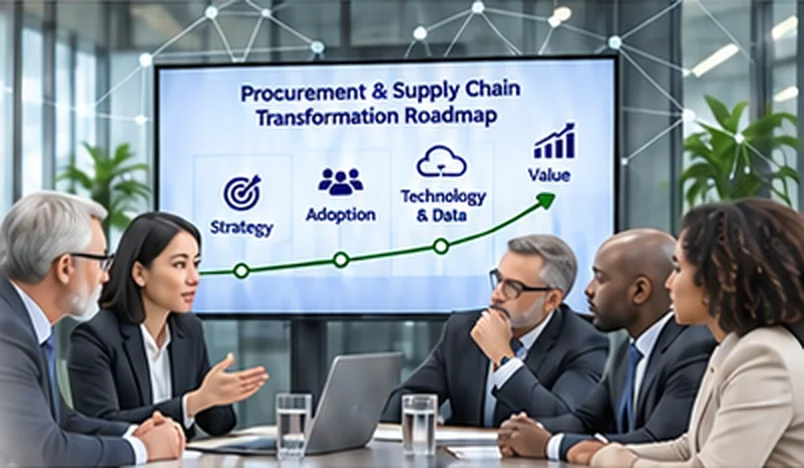
Module 1: Transformation Strategy and Leadership Direction
Establish a shared purpose before committing to change.
This module helps participants define what transformation should achieve and how it supports organizational priorities.
1.1 Procurement and Supply Chain Transformation Context
- Distinguish digitization, task automation, process redesign, and organizational transformation.
- Examine connections among procurement, supply planning, inventory, logistics, finance, and technology.
- Identify operational problems that justify coordinated change.
1.2 Transformation Vision and Strategic Alignment
- Define the desired business outcomes and transformation boundaries.
- Translate strategic priorities into measurable objectives.
- Establish principles for decisions, trade-offs, and investment.
1.3 Leadership Mandate and Sponsorship
- Clarify the roles of executive sponsors, transformation leaders, and process owners.
- Establish leadership commitments and accountability.
- Develop a clear transformation narrative for different stakeholders.
Practical activity: Develop a transformation charter for an organization seeking to modernize procurement and supplier coordination.
Module outcome: Establish a clear transformation purpose, leadership mandate, and definition of success.
Module 2: Current-State Assessment and Transformation Readiness
Understand the organization before designing its future.
Participants assess operational performance, process weaknesses, information quality, and organizational readiness.
2.1 Process and Performance Diagnosis
- Map current procurement and supply chain workflows.
- Identify delays, duplication, manual handoffs, and unclear responsibilities.
- Establish baseline measures for cost, cycle time, quality, and service.
2.2 Data and Technology Readiness
- Assess data availability, completeness, consistency, and ownership.
- Review existing systems, interfaces, and reporting arrangements.
- Identify limitations that could undermine AI-enabled processes.
2.3 People, Capability and Change Readiness
- Assess leadership support, employee skills, and implementation capacity.
- Identify competing initiatives and resource constraints.
- Examine supplier readiness and external dependencies.
Practical activity: Complete a readiness assessment and prioritize the gaps that must be addressed before implementation.
Module outcome: Produce an evidence-based assessment of the organization’s starting point and transformation constraints.
Module 3: AI Opportunity Selection and Investment Prioritization
Select initiatives that solve meaningful business problems.
This module develops a disciplined approach to identifying opportunities and building credible investment proposals.
3.1 AI and Automation Opportunity Identification
- Examine applications in spend classification, supplier intelligence, contract review, planning, and exception management.
- Distinguish AI assistance from rules-based automation and conventional reporting.
- Define the decision or workflow each proposed application will support.
3.2 Opportunity Evaluation and Prioritization
- Evaluate expected value, technical feasibility, data readiness, and adoption complexity.
- Identify dependencies among initiatives.
- Balance quick improvements with foundational investments.
3.3 Business Cases and Funding Decisions
- Estimate implementation, integration, training, support, and ongoing operating costs.
- Define expected benefits and their underlying assumptions.
- Compare scenarios and document uncertainty.
Practical activity: Develop a prioritized opportunity portfolio and business case for a selected initiative.
Module outcome: Recommend investments using transparent criteria and defensible assumptions.
Module 4: Future Operating Models and Technology Selection
Design how the transformed organization will operate.
Participants connect business requirements with process ownership, workforce roles, technology choices, and supplier participation.
4.1 Future-State Process and Operating Model Design
- Redesign workflows around desired outcomes.
- Define responsibilities, approval points, exception handling, and service expectations.
- Identify which activities should remain under direct human control.
4.2 Technology Requirements and Provider Evaluation
- Translate business needs into functional and nonfunctional requirements.
- Evaluate integration, usability, accessibility, scalability, support, and total cost.
- Assess provider claims through demonstrations, references, and appropriate testing.
4.3 Integration and Supplier Ecosystem Planning
- Define information flows among procurement, ERP, supplier, logistics, and analytics platforms.
- Clarify responsibilities across internal teams and external providers.
- Plan for data migration, interoperability, and operational support.
Practical activity: Develop a future operating model and technology evaluation matrix for a procurement modernization initiative.
Module outcome: Align process design, organizational responsibilities, and technology requirements.
Module 5: Responsible AI and Transformation Governance
Create the controls needed for accountable implementation.
This module establishes governance arrangements for AI use, business decisions, implementation risks, and third-party dependencies.
5.1 Governance Structures and Decision Rights
- Define steering committee, sponsor, process owner, and technical responsibilities.
- Establish approval thresholds and escalation routes.
- Maintain decision records and change-control procedures.
5.2 Responsible AI Oversight
- Establish rules for appropriate data use and access.
- Define output validation, human review, and exception handling.
- Address inaccurate outputs, bias, confidentiality, and excessive reliance on automated recommendations.
5.3 Risk and Third-Party Accountability
- Identify operational, commercial, information, and implementation risks.
- Define provider responsibilities and performance expectations.
- Coordinate specialist reviews and maintain evidence of approvals.
Practical activity: Prepare an AI governance and risk-control plan for a proposed supplier intelligence application.
Module outcome: Establish practical oversight that supports responsible delivery and clear accountability.
Module 6: Change Leadership, Workforce Capability and Adoption
Prepare people and partners to make the transformation work.
Participants develop the leadership practices needed to move from approved plans to accepted ways of working.
6.1 Stakeholder Engagement and Communication
- Map stakeholder interests, influence, concerns, and responsibilities.
- Explain the purpose and expected effects of change.
- Establish communication and feedback channels.
6.2 Workforce Preparation and Role Redesign
- Identify skills required for new processes and technologies.
- Develop role-specific training and support.
- Clarify changes to responsibilities, approvals, and performance expectations.
6.3 Adoption and Resistance Management
- Investigate the reasons behind resistance.
- Use champions, demonstrations, pilots, and support arrangements.
- Measure adoption through use, proficiency, process compliance, and feedback.
Practical activity: Develop a change and adoption plan for an AI-enabled procurement workflow.
Module outcome: Lead a structured transition that prepares employees and suppliers for new practices.
Module 7: Transformation Execution and Performance Control
Coordinate delivery while maintaining operational continuity.
This module addresses implementation sequencing, readiness decisions, issue resolution, and leadership reporting.
7.1 Roadmaps, Pilots and Implementation Phases
- Break transformation into manageable initiatives and releases.
- Establish milestones, dependencies, resources, and decision gates.
- Define pilot scope and success criteria before expansion.
7.2 Delivery Assurance and Transition Readiness
- Coordinate testing, data preparation, training, and support.
- Assess readiness before implementation.
- Establish contingency arrangements and responsibility for unresolved issues.
7.3 Performance Monitoring and Corrective Action
- Monitor delivery progress, adoption, risk, cost, and early operational outcomes.
- Identify the causes of performance gaps.
- Recommend corrective actions and communicate decisions to sponsors.
Practical activity: Develop a phased roadmap and executive dashboard for a transformation program.
Module outcome: Guide implementation through evidence-based decisions and coordinated delivery controls.
Module 8: Benefits Realization, Scaling and Sustainable Improvement
Demonstrate results and build the next stage of improvement.
Participants learn to evaluate whether transformation delivers sustained value and whether initiatives are ready to scale.
8.1 Benefits Ownership and Measurement
- Assign accountable owners for expected benefits.
- Compare results with baselines and agreed targets.
- Distinguish realized savings, avoided costs, productivity capacity, and service improvements.
8.2 Operational Handover and Post-Implementation Review
- Transfer ownership to operational teams.
- Confirm support, documentation, controls, and reporting arrangements.
- Capture lessons and investigate unintended consequences.
8.3 Scaling and Continuous Improvement
- Assess whether pilot results justify broader deployment.
- Evaluate capability, data, process, and resource requirements for expansion.
- Refine, pause, or discontinue initiatives when evidence warrants it.
Practical activity: Prepare a benefits review and scaling recommendation for the integrated program case.
Module outcome: Demonstrate business value and establish a credible approach to sustained improvement.